Aurora borealis, or the northern lights, is one of the most sought-after and photographed phenomena. This near-daily occurrence within the Arctic Circle draws many spectators and photographers, and when the spectacle extends beyond the Arctic, people will travel north for hours just to catch a glimpse of its shimmering blues and greens.
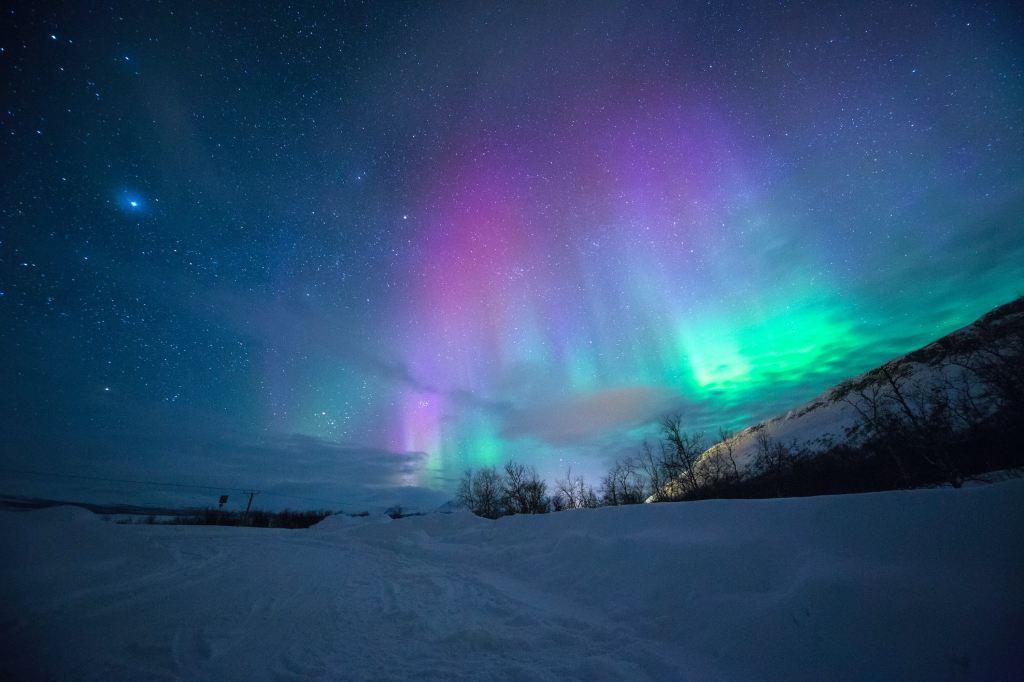
But what causes fascinating display of color? Well, it all starts with the Sun.
It shouldn’t be a surprise to anyone to say that the Sun radiates energy, and this energy takes many forms. Thermal energy warms the planet and saves life from freezing to death. Visible light gets converted into sugars during photosynthesis. Some of this energy, however, is transferred into solar wind, which is what concerns us today.
Solar wind is the term used for the energized particles (protons and electrons) that are released during solar activity, primarily sun spots and solar flares. These particles leave the Sun’s atmosphere, the corona, at speeds about one million miles an hour (or 400 km/s) according to NASA. The energy of these particles are so high that they can no longer be contained by the Sun’s gravity, so they travel into the Solar System.
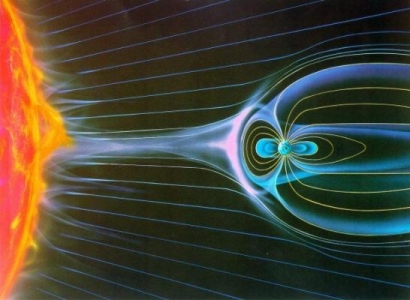
Eventually, solar winds reach the Earth. If these energized particles reach the surface, they could knock out power grids and Earth-orbiting satellites, and expose life to more cancer-causing radiation. Thankfully, our magnetic field acts as a shield towards these particles, pushing most of them away. However, these solar wind particles are charged (being protons and neutrons), and some are attracted to the poles, where auroras are formed.
Those few solar wind particles that reach the poles interact with the particles in the atmosphere, where the energy they carry is absorbed and the solar wind dissipates. Now the atmospheric particles are “excited” (full of energy), and since they cannot hold onto that energy for very long, and they release it into the atmosphere, creating the auroras.
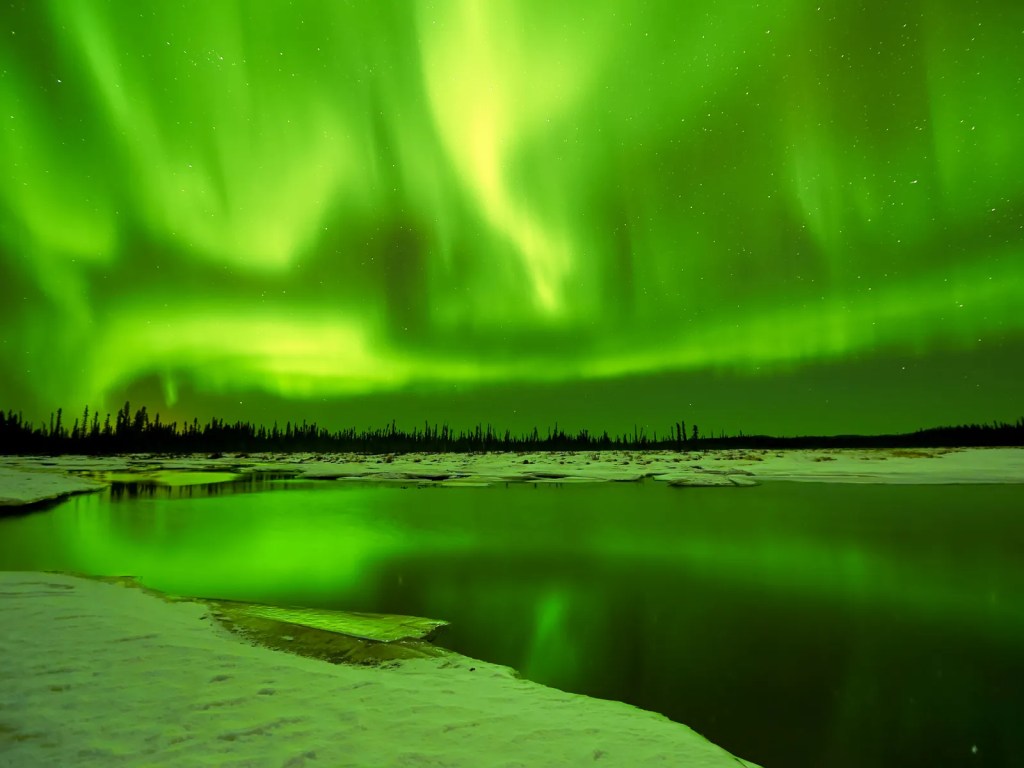
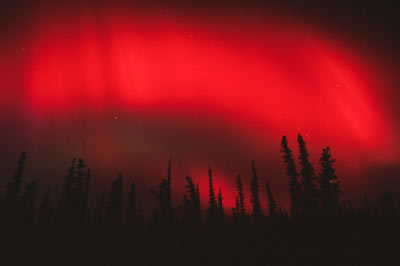
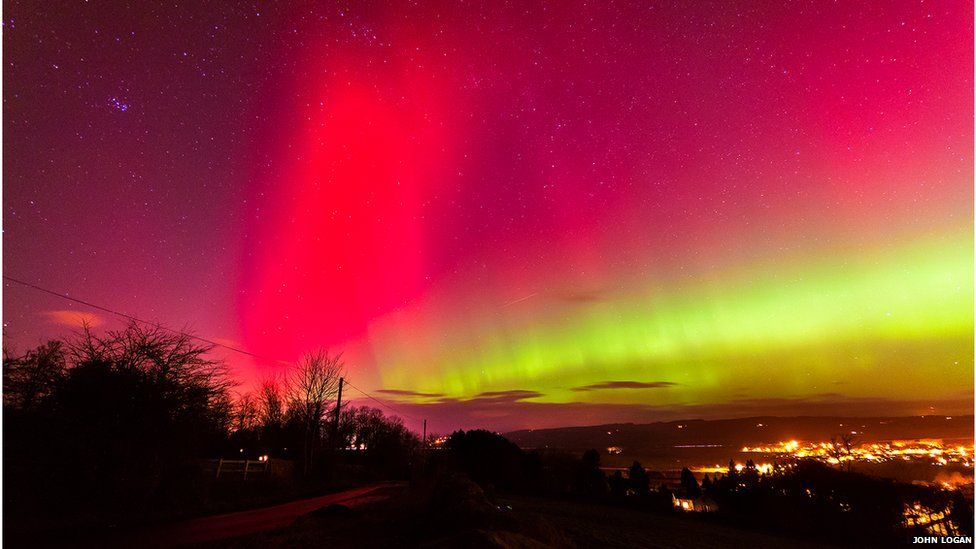
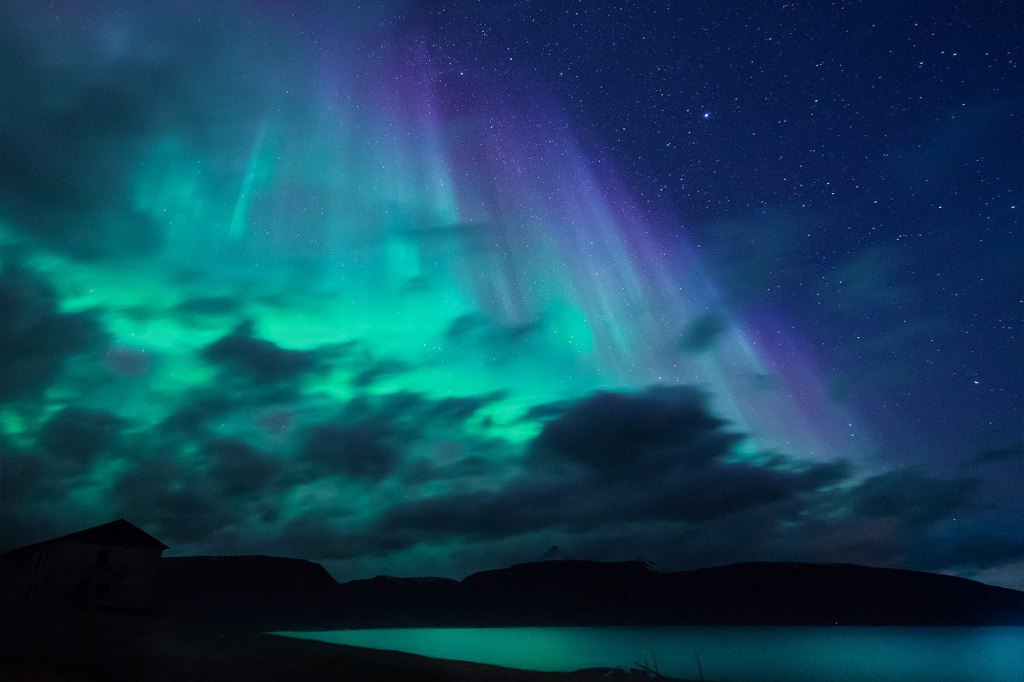
Depending on which particles release the energy, different colors will be seen. Both red and green northern lights are produced by oxygen gas, just at different elevations. Green is created between 60-190 miles (100-300 km) off the ground, while red is created by particles with an elevation of 180-250 miles (300-400 km). Human eyes are most sensitive to the color green, so this tends to be the easiest color to spot in the sky. Red lights are also usually associated with higher solar activity, and are rarer to see.
A mixture of blues and purples are from interactions with nitrogen gasses no higher than 60 miles of elevation. These colors are also usually seen during higher solar activities. Yellows and pinks, the rarest colors to see are a mixture of reds with either green or blue.
If you ever want to see if you can see auroras in your area, you can check out this aurora dashboard created by the National Oceanic and Atmospheric Administration. It shows animations of where the lights can be seen everyday, similar to the radar on most weather apps. Check it out when planning a trip up north to make sure you don’t miss this awe-inspiring event.

 Space Savvy
Leave a comment