It is eclipse season once again!
On Monday, April 8th, the “Great American Eclipse” will be seen across North America, starting in Mazatlan, Mexico. The path of totality will travel northeastward across the continental United States, before passing over the eastern coast of Newfoundland, Canada. The entire total eclipse will be visible on land for approximately two hours, with the entire eclipse lasting nearly six hours.
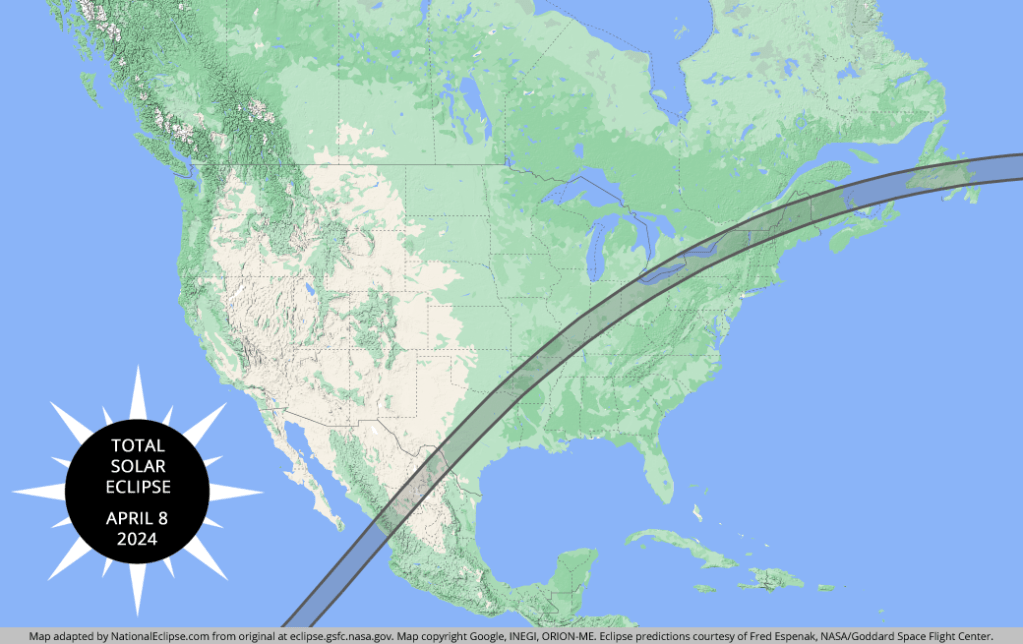
As we know from when we last talked about eclipses, a total eclipse occurs when, from our perspective on Earth’s surface, the Moon covers the Sun entirely. Those who will be in the path of totality will witness this phenomena for about three or four minutes. Partial eclipses will be seen elsewhere for about an hour before and after totality, blocking enough light to make it look like dusk or dawn.
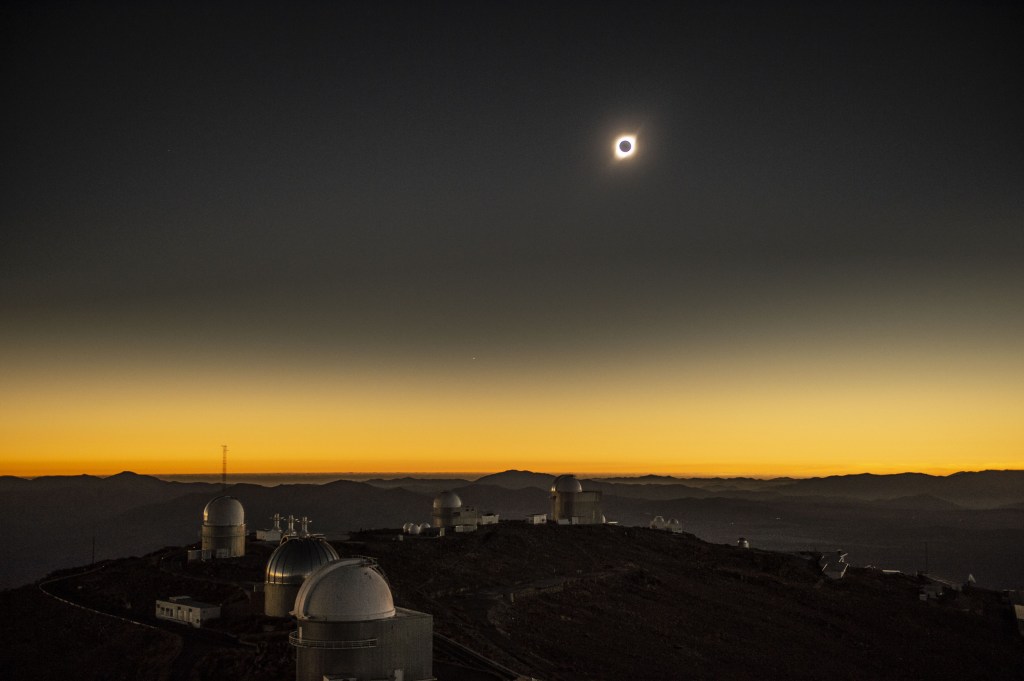
Compared to the 2017 total solar eclipse that traveled over America, the path of totality will be about 57% larger next week. This means that more people (31 million vs 12 million in 2017) will see the total eclipse for a longer time (4 minutes vs 2 and a half). This is due to the fact that the Moon will be a little bit closer to the Earth this year than in 2017.
Even if you don’t live along the path of totality, you’ll still be able to experience a partial eclipse. NASA predicts that almost 99% of Americans will be able to from the comfort of their own homes, even you live in parts of Alaska and Hawaii!
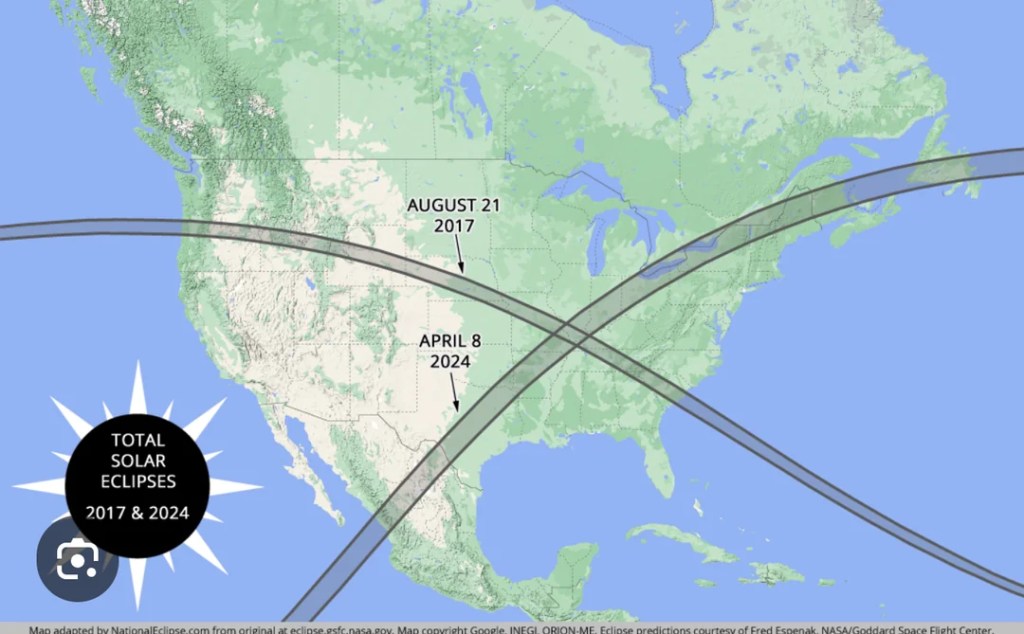
One thing of note that I find very interesting: these paths are very different. The 2017 eclipse started in Oregon and ended in South Carolina, travelling southeastward. Even if you were to look at every single path of upcoming eclipses, it would seen no two paths are the same. What causes this?
Well, just because the Earth, Moon and Sun end up on the same plane to cause an eclipse, doesn’t mean that the orbit on the same plane. In comparison to the Sun and the Earth, the Moon’s orbit is tilted by 5 degrees, which causes total eclipses (when the Moon is at zero degrees relative to the Earth and Sun) to be less common. In those rare occasions where all three celestial bodies do line up, the Moon and the Earth are almost always in different places with respect to the Sun, and compounding that with the Earth’s own 23 degree tilt, means that eclipses will probably never start and end at the same points.
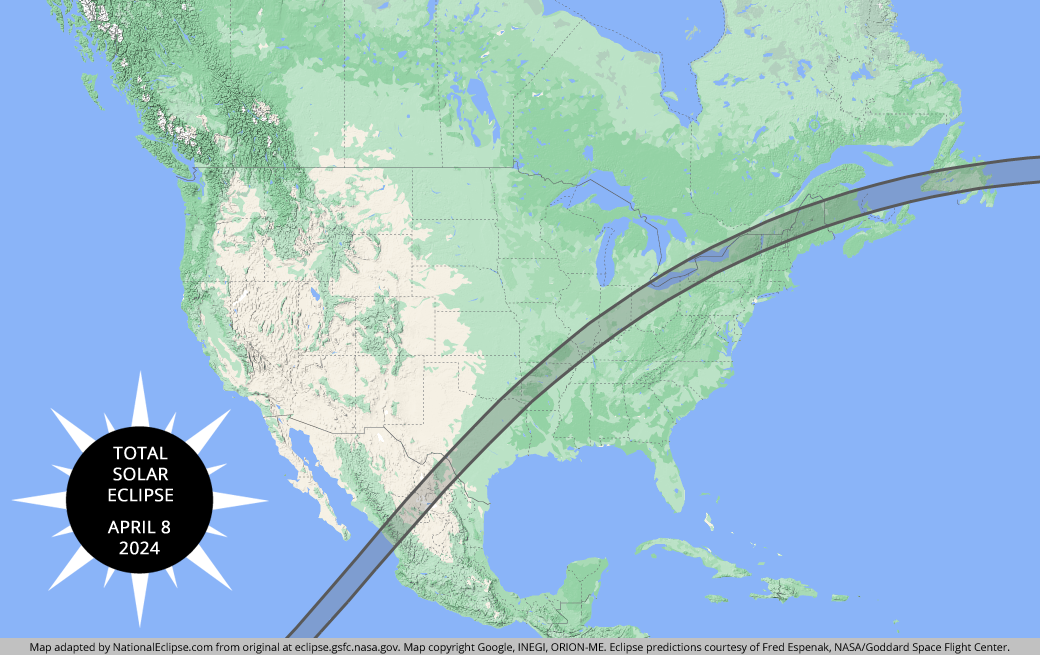
And yet, this one has almost happened before. On March 7th, 1970, a total solar eclipse travelled along the East Coast in a path almost identical to the upcoming eclipse, just shifted eastward by about 15 degrees of longitude.
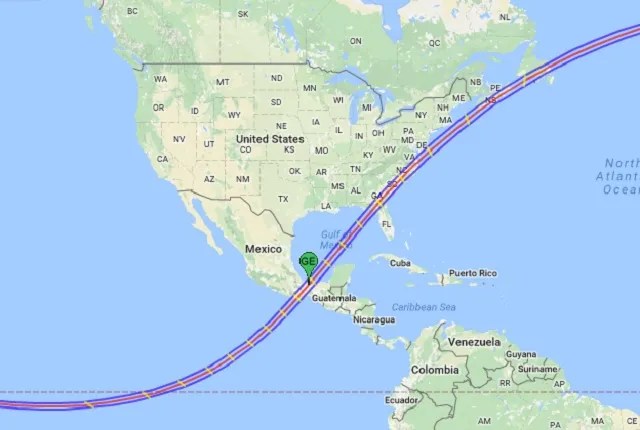
Nevertheless, this does make sense. The Earth (and the Moon by association) travels around the Sun in a cyclical fashion, covering the same distance in the same amount of time, over and over again. Given enough trials, patterns will emerge, shapes repeating themselves over incremental amounts of time. But due to the nature of elliptical orbits and the irrationality of pi, these patterns don’t repeat themselves perfectly. They will be close, like 1970 and 2024, but never exactly the same.
If you want to learn more about the strange counterintuitive nature of eclipses, the YouTube channel minutephysics put out a fantastic video a couple of days ago about why eclipses go eastward when the Moon and Sun travel westward across the sky.
If you want to watch another video, cautioning you of the potential dangers of this particular eclipse, I recommend the vlogbrothers most recent video, and I would heed their advice.
If you have the opportunity to see the Great American Eclipse, I hope that you safely do so. The next total eclipse that will be seen across the continental United States won’t occur until August 2045.
 Space Savvy
Leave a comment